
Understanding the different types of printed fabrics can help you choose the right material for your next outfit, fashion collection, or home décor project. In this guide, we will explore popular fabric printing techniques, traditional Indian prints, printed cotton varieties, and practical tips for selecting quality fabric.
Printed fabrics are a popular choice for everything from everyday clothing and elegant ethnic wear to curtains, cushion covers, and handmade accessories. They bring colour, character, and creativity to textiles, making it possible to transform a simple piece of fabric into something distinctive.
But have you ever wondered why some printed fabrics have the slightly irregular appearance of handmade designs, while others feature incredibly detailed patterns and perfectly repeated motifs?
The answer lies in the printing technique, the fabric itself, and the design being applied.
What Are Printed Fabrics?
Printed fabrics are textiles decorated with patterns, colours, or designs applied to their surfaces using specific printing or dyeing techniques.
These designs can include flowers, geometric shapes, traditional motifs, abstract artwork, animal patterns, and intricate illustrations. Depending on the method used, the print may be created by hand, transferred through a screen, or produced using digital printing technology.
It is important to understand three related terms:
Fabric type: The material itself, such as cotton, silk, linen, or polyester.
Printing technique: The process used to apply the design, such as block printing, screen printing, or digital printing.
Print pattern: The visual design, such as floral, striped, geometric, or abstract.
For example, cotton fabric can feature a floral pattern created using either block printing or digital printing. The base material and the printing method are separate choices.
Different Types of Fabric Printing Techniques
1. Block Printing
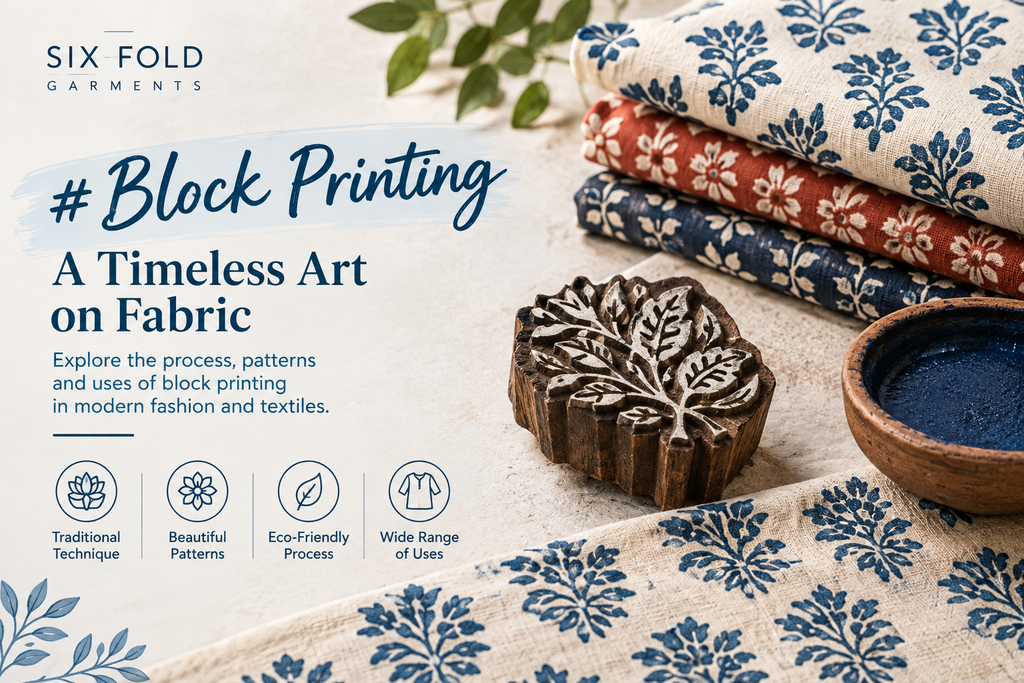
Block printing is a traditional printing technique in which artisans use carved blocks to transfer designs onto fabric. Each block carries part of the design, and different blocks may be needed to create multiple colours.
The artisan applies colour to the block and presses it onto the fabric, repeating the process to build the overall pattern.
Hand block printing is particularly associated with Indian textile traditions, including those of Rajasthan and Gujarat.
Key characteristics:
– Handmade appearance and craftsmanship.
– Repeating floral, geometric, and traditional motifs.
– Small variations that can occur between impressions.
– Suitable for many cotton textiles and selected other fabrics.
Common uses: Kurtas, dresses, sarees, scarves, cushion covers, table linen, and other decorative textiles.
Block-printed fabrics are a good choice when you want a design that reflects traditional craftsmanship rather than a perfectly machine-repeated appearance.
2. Screen Printing
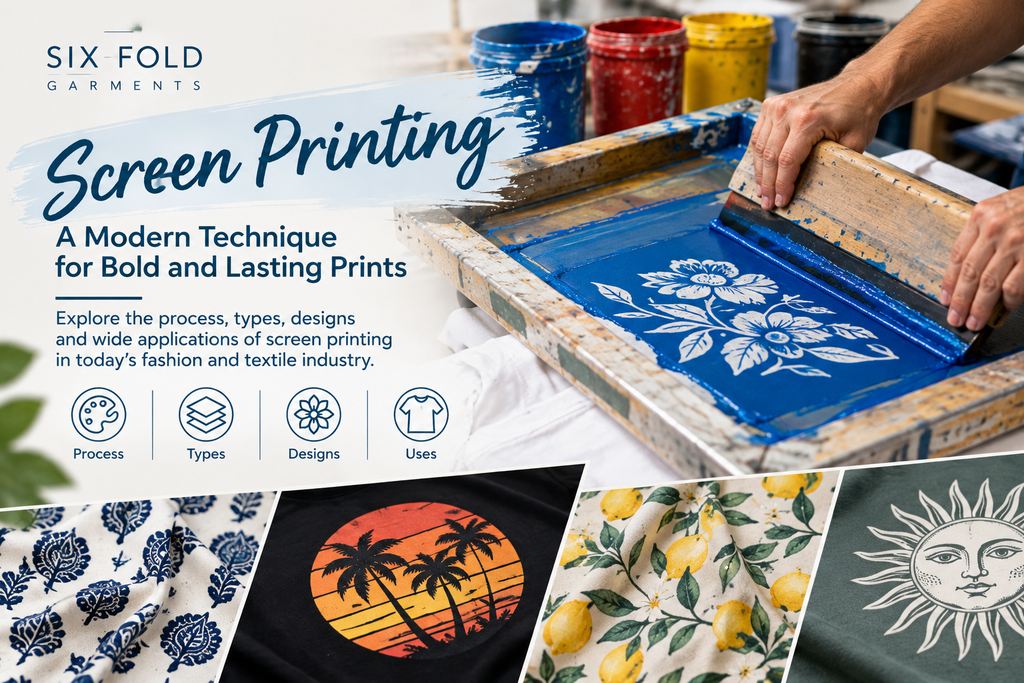
Screen printing transfers colour through a mesh screen using a stencil that determines where the design appears.
Each colour generally requires its own screen or printing step, depending on the production setup. The method can produce bold, clear designs and is widely used in textile manufacturing.
Key characteristics:
– Strong, defined colours.
– Consistent repeated designs.
– Suitable for both small production runs and larger manufacturing operations.
– Can be used on a range of compatible fabrics.
Common uses: T-shirts, casual shirts, cotton dresses, scarves, fashion textiles, and promotional garments.
Screen printing is particularly useful when a design needs to be reproduced consistently across multiple pieces.
3. Digital Printing
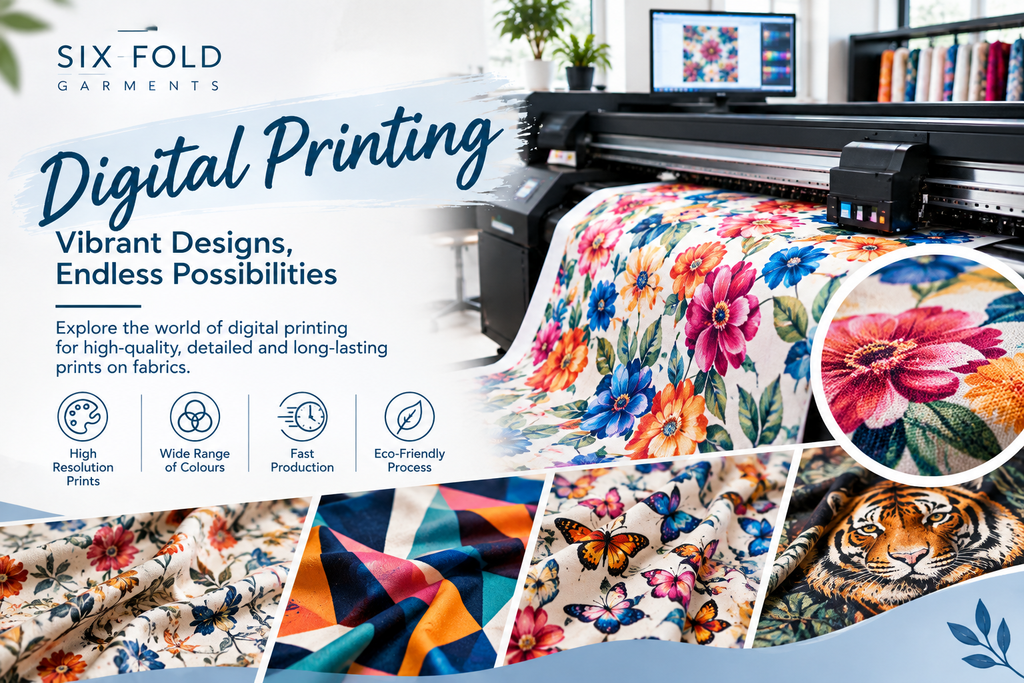
Digital fabric printing uses specialised printers to apply designs directly onto compatible textiles. Artwork is prepared digitally, allowing designers to work with detailed illustrations, gradients, photographs, and complex colour combinations.
Unlike traditional screen printing, digital printing does not normally require a separate screen for each colour.
Key characteristics:
– Fine detail and complex artwork.
– Wide colour possibilities.
– Flexibility for customised designs.
– Potentially less setup waste for certain short production runs.
Its environmental impact depends on factors such as ink chemistry, pretreatment, fabric choice, energy use, and finishing processes. Digital printing should not automatically be considered more sustainable in every situation.
Common uses: Printed sarees, dresses, scarves, fashion collections, custom textiles, and decorative fabrics.
Digital printing is a strong option for designs that contain many colours, detailed illustrations, or photographic elements.
4. Rotary Printing
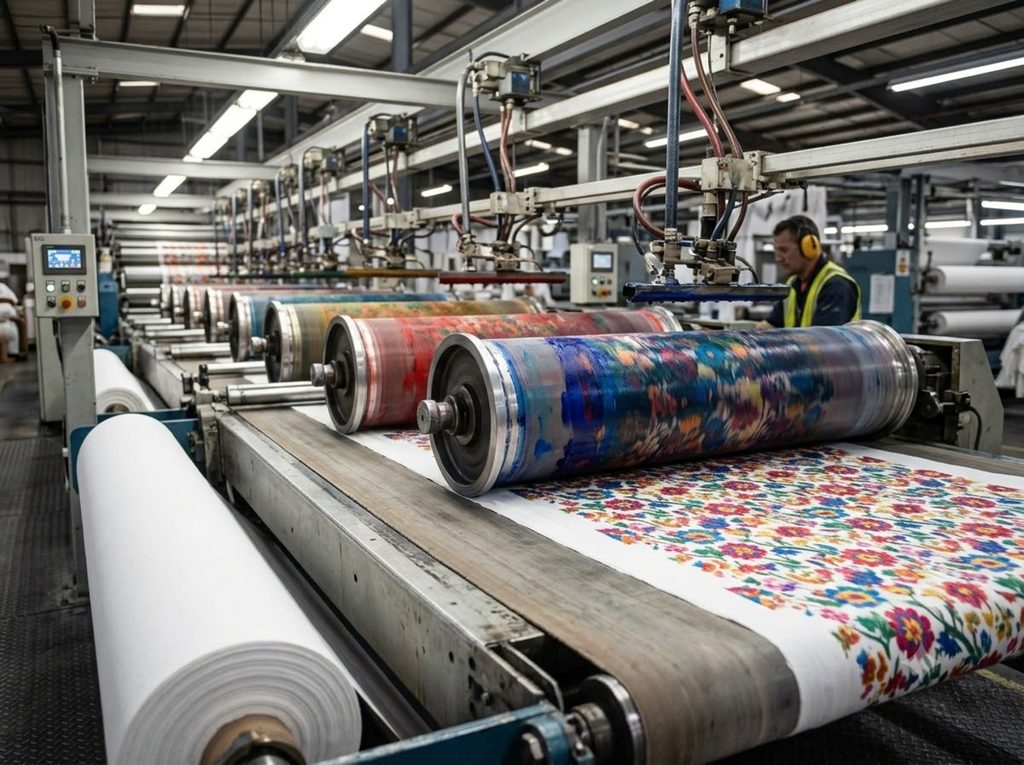
Rotary printing is a mechanical textile printing method that uses engraved cylindrical screens to apply designs continuously as fabric moves through the production line.
It is particularly useful for producing large quantities of fabric with repeating patterns.
Key characteristics:
– Efficient production at scale.
– Consistent repeating designs.
– Suitable for large fabric orders.
– Practical for many commercial textile applications.
Common uses: Printed cotton yardage, garment fabric, bedding, curtains, and other mass-produced textiles.
Rotary printing is often selected when manufacturers need a repeatable design and high production output.
5. Batik Printing
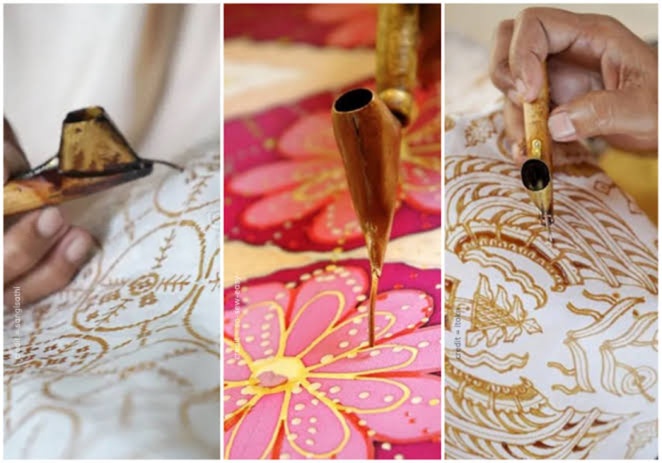
Batik is a traditional wax-resist dyeing technique. Wax is applied to selected areas of fabric to prevent dye from colouring those sections. The fabric is then dyed, and the wax is removed to reveal the design.
Depending on the method, repeated waxing and dyeing can produce intricate patterns and multiple colours.
Key characteristics:
– Distinctive patterns created through resist dyeing.
– Potentially irregular lines and crackled effects.
– Layered colours and artistic designs.
– Strong connections to traditional textile craftsmanship.
Common uses: Dresses, scarves, wraps, wall hangings, and decorative fabrics.
Batik is a good choice for people who appreciate artistic patterns with a handcrafted appearance.
6. Kalamkari Printing
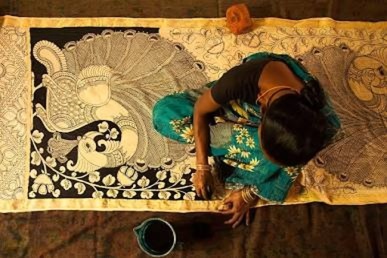
Kalamkari is a traditional Indian textile art associated particularly with Andhra Pradesh. The name refers to artwork created using a pen-like tool, and the tradition includes different methods of drawing and printing designs on fabric.
Depending on the style, artisans may use hand-drawn outlines, block printing, and carefully controlled dyeing processes.
Common motifs include flowers, trees, mythological scenes, and intricate decorative compositions.
Key characteristics:
– Detailed traditional artwork.
– Nature-inspired and narrative designs.
– Strong cultural and artistic significance.
– Often associated with elaborate textile compositions.
Common uses: Sarees, dupattas, kurtas, wall hangings, and traditional garments.
Kalamkari is an appealing option for ethnic clothing and projects where the artwork itself is an important part of the design.
7. Tie-Dye and Bandhani
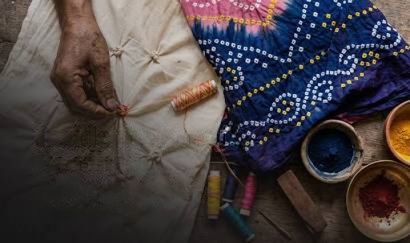
Tie-dye and Bandhani are related resist-dyeing approaches in which sections of fabric are tied, gathered, or otherwise protected before dyeing.
Bandhani is a traditional Indian technique in which small portions of fabric are tightly tied to create characteristic dotted patterns after dyeing.
Key characteristics:
– Repeating dots or irregular patterns.
– Bright colours and distinctive visual effects.
– Handmade variations in traditional pieces.
– Strong associations with Indian festive and regional clothing.
Common uses: Sarees, dupattas, dresses, scarves, and festive outfits.
These fabrics work particularly well when you want colour and pattern to be the main feature of an outfit.
8. Dabu Printing
Dabu printing is a traditional resist-printing technique associated with Rajasthan. Artisans apply a resist paste to selected areas of fabric before dyeing it. The protected areas resist the dye, helping create the final pattern.
Traditional Dabu work is often associated with earthy colour palettes, indigo tones, and handcrafted motifs, although designs and colours vary.
Key characteristics:
– Resist-created patterns.
– Traditional handcrafted appearance.
– Geometric, floral, and nature-inspired motifs.
– Variations that reflect the production process.
Common uses: Cotton kurtas, dresses, dupattas, scarves, and home décor textiles.
Dabu printing is worth exploring if you prefer heritage-inspired designs with a distinctive handcrafted character.
Popular Types of Printed Cotton Fabrics
Cotton is widely used for printed textiles because it is available in different weights and finishes and can suit a broad range of applications.
However, not every cotton fabric feels or behaves the same way. The weave, finishing, and weight all affect how it drapes and how clearly it displays a print.
1. Printed Cotton Lawn
Cotton lawn is a fine, lightweight fabric with a relatively smooth surface. Its light construction makes it suitable for warm-weather garments and designs that need a soft drape.
Best for: Summer dresses, shirts, kurtas, blouses, and lightweight children’s clothing.
2. Printed Cotton Voile
Cotton voile is a lightweight, often slightly sheer fabric with a soft, airy feel. Its delicate appearance makes it useful for garments that benefit from lightness and movement.
Best for: Lightweight tops, summer dresses, scarves, and selected curtain applications.
Because voile can be sheer, some garments may require a lining.
3. Printed Cotton Poplin
Cotton poplin is generally more structured than lawn or voile. Its smooth surface and relatively firm construction make it a practical option for everyday garments.
Best for: Shirts, kurtas, dresses, skirts, and structured casual clothing.
Poplin is useful when you want a printed fabric that holds its shape more readily than very lightweight cotton.
4. Printed Cotton Satin
Cotton satin uses a satin-style weave to create a smoother surface and a subtle sheen. It is different from silk satin, as the fibre content can still be entirely cotton.
Best for: Dresses, blouses, decorative cushions, and selected bedding applications.
When buying cotton satin, check the fibre composition and finish, since products marketed with similar names may differ.
Popular Printed Fabric Patterns
Printing techniques describe how designs are applied. Patterns describe what those designs look like.
Floral and Botanical Prints
Floral prints feature flowers, leaves, vines, and other plant-inspired motifs. They can range from tiny repeated flowers to large, dramatic botanical illustrations.
They work well for dresses, kurtas, skirts, shirts, scarves, and decorative cushions.
Geometric and Abstract Prints
Geometric prints use shapes such as circles, squares, lines, diamonds, and repeating arrangements. Abstract prints use less literal forms, colours, and compositions.
Both styles can suit contemporary clothing, co-ord sets, shirts, and modern interiors.
Traditional and Ethnic Prints
Traditional Indian prints include a broad range of regional motifs and textile traditions. Examples include Bagru prints, Dabu prints, Kalamkari designs, and Bandhani patterns.
Their designs may reflect local craftsmanship, historical influences, and regional artistic practices.
Stripes, Checks, and Polka Dots
Stripes, checks, and polka dots are familiar patterns that can work across casual and formal
clothing.Their visual effect depends on the size, spacing, and contrast of the design. Fine stripes may look subtle, while larger checks or dots can create a more prominent pattern.
How to Choose the Right Printed Fabric
Choosing printed fabric involves more than finding a design you like. The fabric must also suit the garment, intended use, and care requirements.
1. Consider the Intended Use
For summer clothing, lightweight cotton lawn and voile may be suitable options. Shirts or garments that need more structure, cotton poplin may work better.
Curtains or cushion covers, consider fabric weight, durability, light exposure, and cleaning requirements before choosing a material.
2. Check the Fabric Weight and Drape
Lightweight fabrics generally move more freely, while heavier fabrics tend to provide more structure.
If you are buying fabric online, review the product specifications and request a sample when possible. Photographs alone may not accurately communicate thickness, texture, or transparency.
3. Choose the Print Scale Carefully
Small repeating motifs can work well for everyday clothing, while larger prints may suit statement garments and decorative pieces.
Consider the garment’s shape and the amount of fabric required. A large motif may need careful placement so that important parts of the design are not cut off during stitching.
4. Examine Colour and Print Quality
Look for reasonably consistent colour, clear design details, and any visible defects. With handmade printing, slight differences between impressions may be part of the process rather than a flaw.
For machine-printed fabric, examine the alignment and consistency of repeating motifs.
5. Check Shrinkage and Care Requirements
Cotton may shrink during washing, depending on its construction and finishing. Follow the supplier’s instructions about prewashing and allow for shrinkage when calculating fabric requirements.
Also check whether the print requires special washing instructions, particularly for darker colours or fabrics with decorative finishes.
How to Care for Printed Fabrics
Proper care can help maintain the appearance of printed textiles for longer.
Read the care label: Follow the manufacturer’s washing and drying instructions.
Separate colours when needed: New, dark, or strongly coloured fabrics may release excess dye during early washes.
Use a suitable detergent: Choose a product appropriate for the fabric and its care instructions.
Avoid excessive heat: High temperatures can affect some dyes, finishes, and fabric fibres.
Dry appropriately: Follow the label and avoid prolonged direct sunlight if fading is a concern.
Store clean and dry: Make sure textiles are dry before storing them to reduce the risk of musty odours and moisture damage.
Hand-printed, naturally dyed, embellished, or vintage fabrics may need more specific care than ordinary printed cotton. When in doubt, check with the fabric supplier or a suitable cleaning professional.
Frequently Asked Questions
What are the most popular types of printed fabrics?
Popular options include block-printed cotton, digitally printed fabrics, screen-printed textiles, floral prints, geometric prints, Bandhani, Kalamkari, and Dabu fabrics. The best option depends on the intended use, preferred design, and material.
Which printed cotton fabric is best for summer?
Lightweight cotton lawn and cotton voile are popular choices for summer clothing because of their light construction. Cotton poplin can be suitable when a slightly more structured garment is preferred. The best choice also depends on the weave, finishing, and garment design.
What is the difference between block printing and digital printing?
Block printing uses physical blocks to transfer designs onto fabric, often creating a handcrafted appearance. Digital printing uses specialised printers to apply digitally prepared artwork, making complex designs and detailed colour combinations possible.
Are printed fabrics suitable for dresses and home décor?
Yes. Printed fabrics are used for dresses, kurtas, shirts, skirts, curtains, cushions, table linen, and many other applications. Choose the fabric based on durability, drape, weight, and cleaning requirements rather than the print alone.
How can you tell whether printed fabric is good quality?
Check the fibre composition, fabric weight, surface feel, print clarity, colour consistency, and construction. If possible, inspect a physical sample and review the care instructions before purchasing a large quantity.
The best choice depends on what you want to make. Lightweight cotton lawn may be ideal for a summer dress, structured poplin may suit a shirt, and handcrafted prints may be perfect for a traditional outfit or decorative project.
Before buying, consider the base fabric, printing method, pattern scale, quality, and care requirements. Understanding these differences will help you select printed fabrics that look beautiful and work well for your project.