
Have you ever noticed a beautifully stitched floral design on a kurta, a company logo on a polo shirt, or a detailed pattern on a traditional Indian outfit? These designs are examples of embroidery, a decorative technique that adds colour, texture, and personality to fabric.
People have used embroidery for generations to decorate clothing and textiles.. Today, it combines traditional hand-stitching skills with modern machines and digital technology, making it useful for everything from designer fashion to large-scale garment production.
But what exactly is embroidery, how does it work, and which types do people commonly use?
This guide explains the meaning of embroidery, explores popular techniques and stitches, discusses suitable fabrics, and shows how the textile and fashion industries use embroidery.
What Is Embroidery?
Embroidery is the art of decorating fabric or other suitable materials by stitching thread or yarn into a design using a needle, either by hand or with a machine.
The designs can include flowers, geometric patterns, names, initials, company logos, decorative borders, and detailed artwork. Depending on the technique, embroidery can create a flat design, a raised texture, or an intricate decorative effect.
For example, a simple embroidered logo on a shirt may use a few colours and basic stitches, while a traditional embroidered garment may feature several patterns, threads, and decorative elements.
People use embroidery for both practical and decorative purposes. It can personalise everyday clothing, enhance the appearance of fashion garments, represent a brand, or preserve traditional textile craftsmanship.
What Is the Purpose of Embroidery?
The main purpose of embroidery is to add decorative or identifying details to a material.
Common purposes include:
-Decoration: Adding patterns, flowers, borders, and other visual details to clothing.
– Personalisation: Stitching names, initials, or custom designs onto garments and accessories.
– Branding: Adding company logos to uniforms, caps, jackets, and workwear.
– Traditional craftsmanship: Preserving regional textile arts and cultural designs.
– Fashion design: Creating distinctive textures and details for contemporary and traditional clothing.
Embroidery allows designers and manufacturers to transform a plain fabric into a product with a more individual appearance.
How Does Embroidery Work?
The embroidery process depends on whether people create the design by hand or by machine. However, both methods follow the same basic principle: the embroiderer stitches thread through or into the fabric to create a planned design.
Step 1: Choose the Design
The first step is deciding what the finished embroidery should look like. It could be a simple flower, a decorative border, a name, or a company logo.
The designer should select a design that matches the size of the embroidery area and the type of fabric used.
Step 2: Select the Fabric and Thread
Different fabrics and threads create different results.People can embroider cotton, denim, linen, and many other suitable materials, provided they choose a design and stabilisation method that suit the fabric.
Thread selection also matters. Cotton, polyester, rayon, and specialised embroidery threads can produce different finishes, colours, and levels of sheen.
Step 3: Prepare the Design
For hand embroidery, the embroiderer may transfer the design onto the fabric using an appropriate marking method.
For computerized machine embroidery, the designer must first digitize the artwork. Digitizing converts the design into instructions that tell the embroidery machine where to stitch, which stitch types to use, and how to construct the design.
This step is important because the designer may need to adjust artwork that looks good on a screen before the machine can reproduce it successfully with thread.
Step 4: Stabilise the Fabric
Depending on the material, the embroiderer may need to use an embroidery hoop, frame, or stabilising backing to support the fabric during stitching.
Proper stabilisation helps control movement and reduces problems such as puckering, stretching, or uneven stitching.
Step 5: Stitch the Design
The embroiderer creates the design by passing thread through the fabric using selected stitches. In hand embroidery, the person controls each stitch. In machine embroidery, the machine follows the programmed instructions.
Step 6: Finish and Inspect
After stitching, the embroiderer trims excess threads and checks the design for loose stitches, uneven areas, and other defects. The embroiderer also handles any backing according to the garment’s construction and intended use.
A well-prepared design, suitable materials, and careful finishing all contribute to a professional result.
What Are the Different Types of Embroidery?
People classify embroidery by the method they use to create the design and by the regional or decorative style of their work.
1. Hand Embroidery
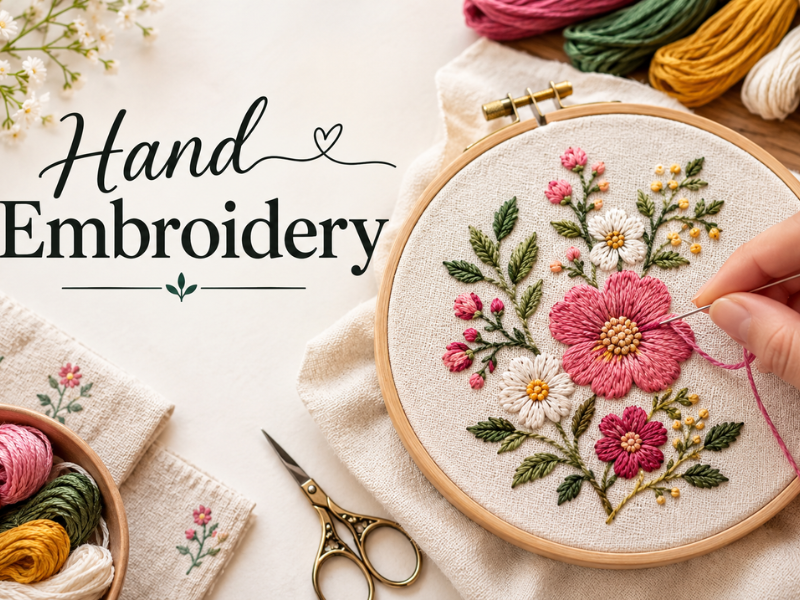
Embroiderers create hand embroidery manually using a needle and thread.. The person making the design controls the placement, direction, and tension of individual stitches.
People often use hand embroidery to create intricate artwork, personalised gifts, decorative clothing, and traditional textile designs.
Key characteristics:
– Individual control over each stitch.
– Flexibility for creative and detailed work.
– Suitable for artistic and personalised projects.
– Often requires considerable time and practice.
Hand embroidery is a good option for people who value handmade details and the individuality of crafted textiles.
2. Machine Embroidery
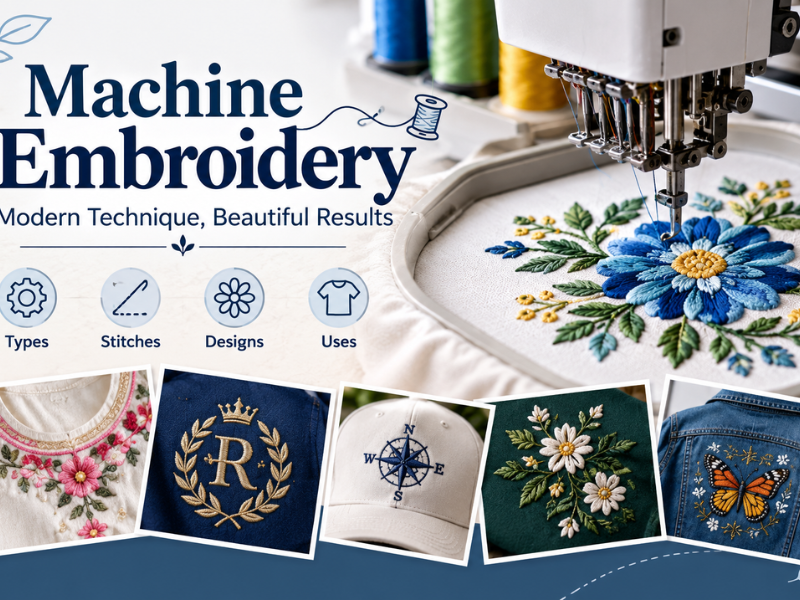
Machine embroidery uses specialised equipment to stitch a design onto fabric. Depending on the machine and setup, it can reproduce repeated designs more quickly than manual stitching.
Manufacturers commonly use machine embroidery to decorate garments, uniforms, caps, bags, and other textile products.
Key characteristics:
– Consistent reproduction of suitable designs.
– Faster production for repeated patterns.
– Useful for commercial orders.
– Requires appropriate machine settings and design preparation.
Machine embroidery is particularly useful when a business needs the same logo or design on multiple garments.
3. Computerized Embroidery
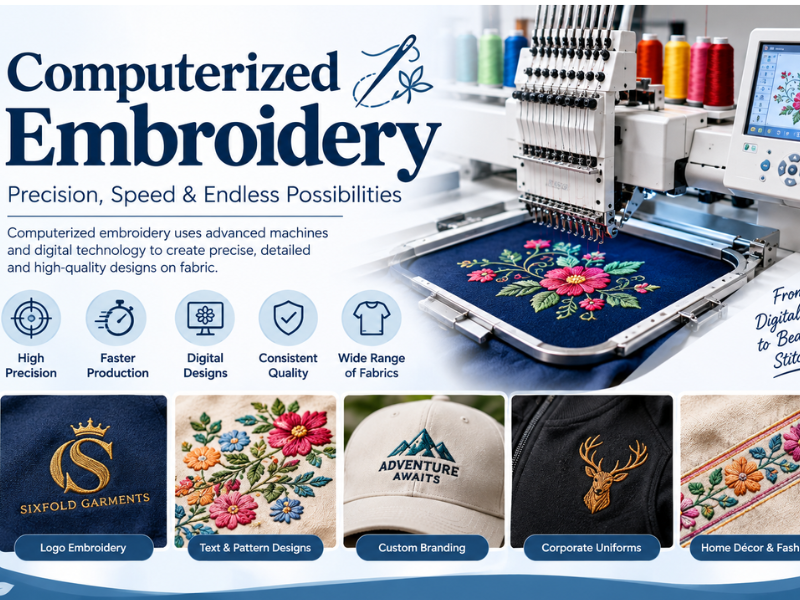
Computerized embroidery is a form of machine embroidery in which a digital design file controls the stitching process.
Before production, manufacturers digitize the artwork to define stitch types, directions, densities, and other machine instructions. The machine then follows those instructions to produce the design.
Manufacturers widely use computerized embroidery in commercial garment production because it allows them to reproduce suitable designs consistently.
However, the quality of the result still depends on digitizing, thread selection, fabric compatibility, machine settings, and finishing.
4. Traditional Indian Embroidery
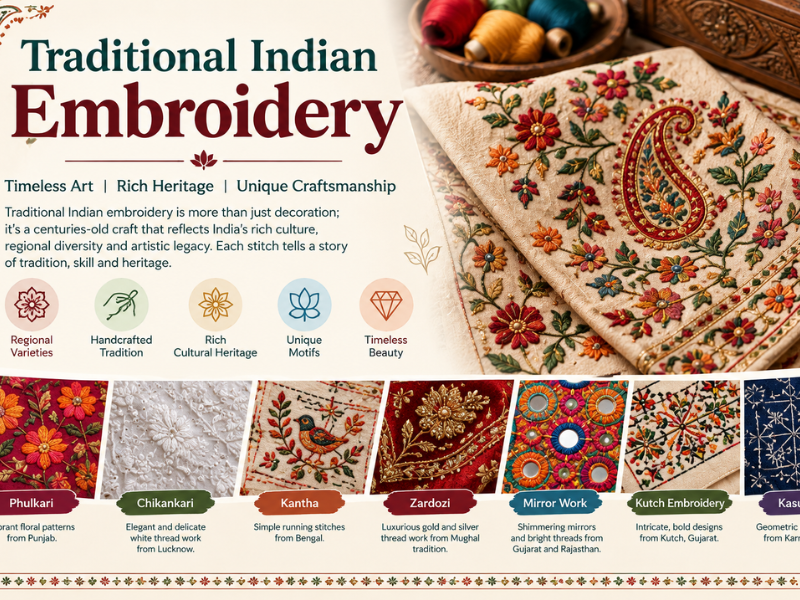
India has a rich variety of embroidery traditions, with different regions developing distinctive motifs, stitches, materials, and decorative styles.
Some well-known examples include:
– Chikankari: A traditional embroidery style associated with Lucknow, known for delicate stitched patterns, often on lightweight fabrics.
– Phulkari: A Punjabi embroidery tradition recognised for colourful threadwork and floral or geometric arrangements.
– Kantha: A textile tradition associated with Bengal that uses running stitches to create decorative patterns and, in some forms, layered textiles.
– Kutch embroidery: A broad range of embroidery traditions associated with Gujarat, often featuring colourful threadwork, mirrors, and distinctive regional motifs.
These styles demonstrate that embroidery is more than a way to decorate clothing. It can also reflect regional identity, craftsmanship, and cultural heritage.
What Are the Most Common Embroidery Stitches?
Different stitches create different textures, outlines, and decorative effects.Understanding the basics helps readers learn how embroiderers construct embroidery designs.
Stitch | What it does | Common use |
Running stitch | Creates a line using simple, spaced stitches | Outlines and linear patterns |
Backstitch | Forms a connected line with overlapping stitch placement | Lettering and detailed outlines |
Chain stitch | Creates linked loops resembling a chain | Decorative outlines and traditional designs |
Satin stitch | Covers an area with closely arranged stitches | Letters, petals, and filled shapes |
Cross-stitch | Forms an X-shaped stitch | Counted patterns and decorative artwork |
French knot | Creates a small raised knot | Flower centres and textured details |
The best stitch depends on the design, fabric, thread, and desired appearance. Larger filled areas, for example, may require a different approach from fine outlines or small decorative details.
Which Fabrics Are Suitable for Embroidery?
Embroiderers can work with many fabrics, but they must choose a material that suits the design and stitching method.
Cotton
Cotton is a common choice for embroidery because many cotton fabrics are relatively easy to handle and are available in different weights. Designers often use embroidery to decorate shirts, kurtas, casual clothing, and decorative textiles.
Denim
Denim provides a sturdy surface for many embroidered designs.Manufacturers commonly use embroidery to decorate jackets, jeans, shirts, and bags.
Linen
Designers use linen for decorative embroidery, clothing, table linen, and other textile projects. They should consider its weave and texture when selecting stitches and design details.
Silk
Designers can embroider silk to create elegant decorative details on sarees, blouses, dupattas, and other garments. Because some silk fabrics are delicate, the thread, needle, stabilisation, and stitch density need careful consideration.
Polyester and Blended Fabrics
Manufacturers use polyester and fabric blends to produce many modern garments and accessories.. Their suitability depends on the fabric’s construction, stretch, heat sensitivity, and the embroidery method.
Can embroiderers work with any fabric? Not every fabric is equally suitable for every design. Very thin, slippery, stretchy, or delicate materials may need special stabilisation and careful adjustments. Testing a sample before production can help identify potential problems.
What Do People Use Embroidery For?
Manufacturers use embroidery across the fashion, textile, promotional-product, and home décor industries.
1. Clothing and Fashion
Embroidery adds decorative details to shirts, kurtas, sarees, dresses, jackets, denim, and other garments. Designers use it to create patterns, embellish borders, and make individual pieces stand out.
2. Company Logos and Uniforms
Businesses commonly use embroidered logos on polo shirts, uniforms, jackets, caps, and workwear. Thread creates a textured finish that can work well for many bold logos and lettering designs.
Designers must prepare the design carefully to keep the lettering and details clear at the selected size.
3. Bags and Accessories
Manufacturers can personalise tote bags, backpacks, caps, pouches, and other accessories with embroidered names, motifs, or logos.
Designers should check the fabric’s thickness and construction before selecting the embroidery method.
4. Home Décor
Manufacturers also use embroidery to decorate cushion covers, table linen, wall hangings, curtains, and selected bedding products.
These applications allow designers to introduce texture and decorative details into interior spaces.
5. Personalised and Promotional Products
Embroidered initials, names, and custom designs are popular for gifts, team clothing, events, and branded merchandise.
The technique is particularly useful when a design needs to feel tactile rather than simply printed onto the surface.
Embroidery vs Printing: What Is the Difference?
Designers use both embroidery and printing to decorate textiles, but each method produces different results.
| Feature | Embroidery | Fabric printing |
Method | Uses stitches and thread | Applies colour using ink, dyes, or other printing processes |
Appearance | Textured, often slightly raised | Usually flatter, depending on the print method |
Design detail | Works well with suitable shapes, lettering, and defined details | Can reproduce photographs, gradients, and complex artwork |
Fabric considerations | Requires suitable support and stitch construction | Depends on the printing process and fabric compatibility |
Common applications | Logos, monograms, decorative motifs | Full-colour graphics, all-over patterns, photographic designs |
Neither method is automatically better for every project. Embroidery may suit a company logo on a polo shirt, while printing may be more appropriate for a large, multicoloured illustration.
The best choice depends on the artwork, garment, quantity, budget, and expected appearance.
What Are the Benefits of Embroidery?
Embroidery offers several advantages when the technique is appropriate for the product.
1. Textured Appearance: Embroidery adds dimension to fabric through stitches, creating a textured look that differs from a flat printed design.
2. Personalisation: Designers can customise garments and accessories with embroidered names, initials, logos, and unique motifs.
3. Design flexibility: Different stitches, thread colours, and techniques allow a wide variety of decorative effects.
4. Branding opportunities: Embroidered logos can provide a distinctive finish for uniforms and branded apparel.
5. Cultural significance: Traditional embroidery helps preserve regional craft practices and textile heritage.
6.Durability: Manufacturers can create durable embroidery by using suitable fabrics and quality stitching, while proper care helps the design withstand repeated use.
Embroidery also has limitations. It can be more expensive or time-consuming than some printing methods, and dense stitching may not suit very lightweight fabrics. Very fine details and colour gradients can also be difficult to reproduce accurately with thread.
Frequently Asked Questions About Embroidery
What is embroidery in simple words?
Embroidery is the process of decorating fabric by stitching thread into patterns, pictures, lettering, or other designs using a needle by hand or with a machine.
Do People Create Embroidery by Hand or Machine?
People can create embroidery by hand or machine. Hand embroidery offers direct control over individual stitches, while machine and computerized embroidery are useful for producing suitable designs efficiently and consistently.
Is embroidery better than printing?
It depends on the project. Embroidery creates a textured stitched design and is often suitable for logos and monograms. Printing is generally more suitable for photographs, gradients, and detailed multicolour artwork.
Can People Embroider Any Fabric?
People can embroider many types of fabric, but they must choose a suitable design and stitching method for each material.Lightweight, stretchy, slippery, or delicate fabrics may need special stabilisation and adjustments.
Is embroidery durable?
A well-constructed embroidery design can last longer when people care for the garment according to its care instructions. Fabric quality, thread selection, stitch density, and washing methods all affect how well it lasts.