
Embroidery can be done using different types of threads, depending on whether you are working by hand or using an embroidery machine.
– Cotton embroidery floss: Commonly used for hand embroidery, decorative stitching, and beginner projects.
– Pearl cotton: Suitable for textured designs, outlines, and decorative stitches.
– Polyester embroidery thread: Frequently used for machine embroidery, especially on garments that need regular washing.
– Rayon embroidery thread: Popular for machine embroidery designs that require a shiny, vibrant finish.
– Silk embroidery thread: Used for detailed, smooth, and decorative embroidery.
– Metallic embroidery thread: Adds a decorative shine to logos, festive clothing, and special designs.
– Wool embroidery thread: Useful for textured embroidery and selected traditional techniques.
There is no single thread that works best for every embroidery project. Your choice should depend on the fabric, design, stitching technique, and required finish.
Types of Thread Used for Embroidery
1. Cotton Embroidery Floss
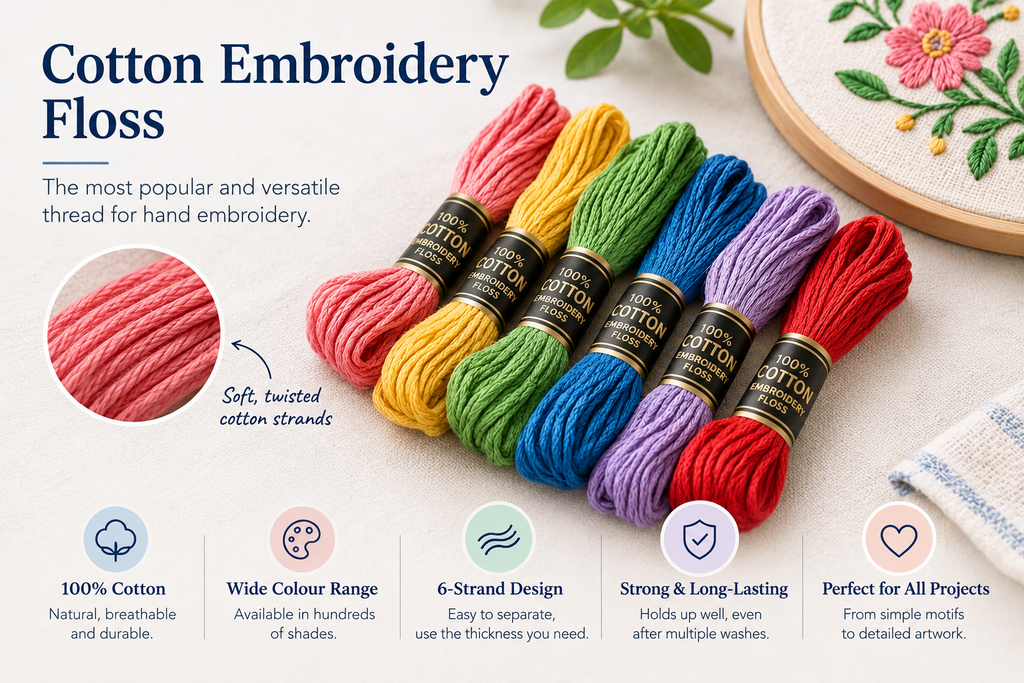
Cotton embroidery floss is one of the most popular choices for hand embroidery. It is generally made from cotton fibres and is commonly available as six loosely twisted strands that can be separated according to the thickness required.
Beginners often choose cotton floss because it is easy to handle, available in many colours, and suitable for different hand embroidery techniques. You can use it for floral designs, lettering, decorative borders, and embroidery on cotton or linen fabric.
Best uses:
– Hand embroidery and basic stitches
– Floral patterns and lettering
– Decorative designs on clothing and accessories
Advantages: Versatile, easy to find, and available in many shades.
Things to consider: Some colours may bleed during washing, depending on the dye and thread quality. Check the care instructions before using it on washable garments.
2. Pearl Cotton Thread
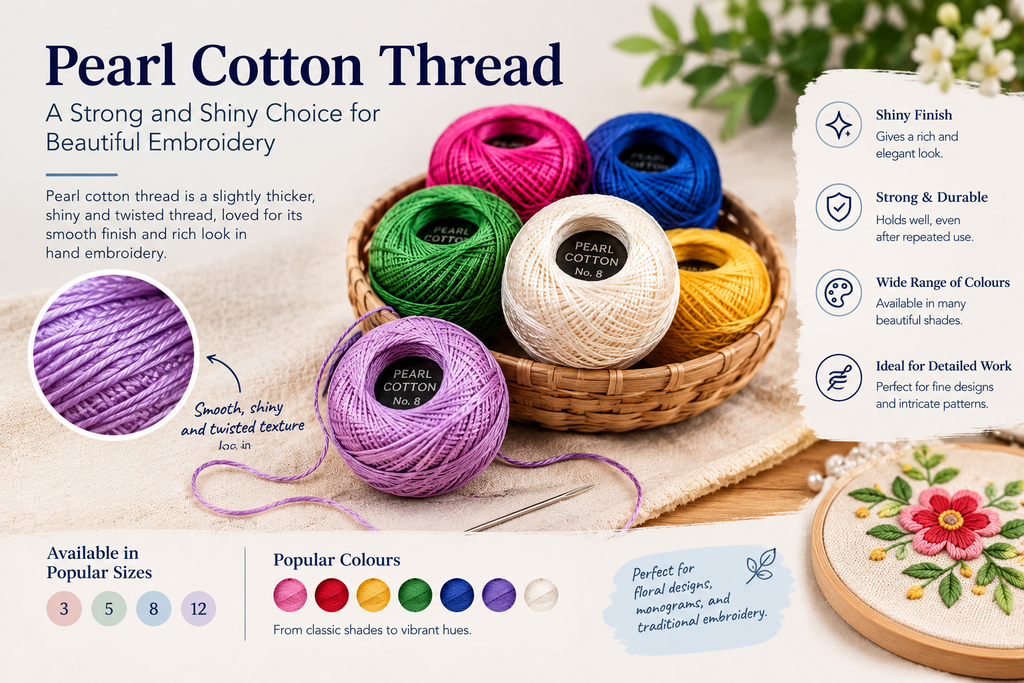
Pearl cotton, also called perle cotton, is a non-divisible thread with a noticeable twist and a slight sheen. Unlike six-strand embroidery floss, it is generally used as a complete thread rather than separated into individual strands.
Its rounded structure creates defined stitches that stand out from the fabric. This makes it suitable for outlines, decorative borders, textured flowers, and traditional embroidery patterns.
Best uses:
– Outlining designs
– Decorative stitching
– Textured patterns and borders
Pearl cotton is available in different thicknesses. Thinner varieties work well for smaller details, while thicker varieties create bolder stitches. Always match the thread thickness to the fabric and needle.
3. Polyester Embroidery Thread
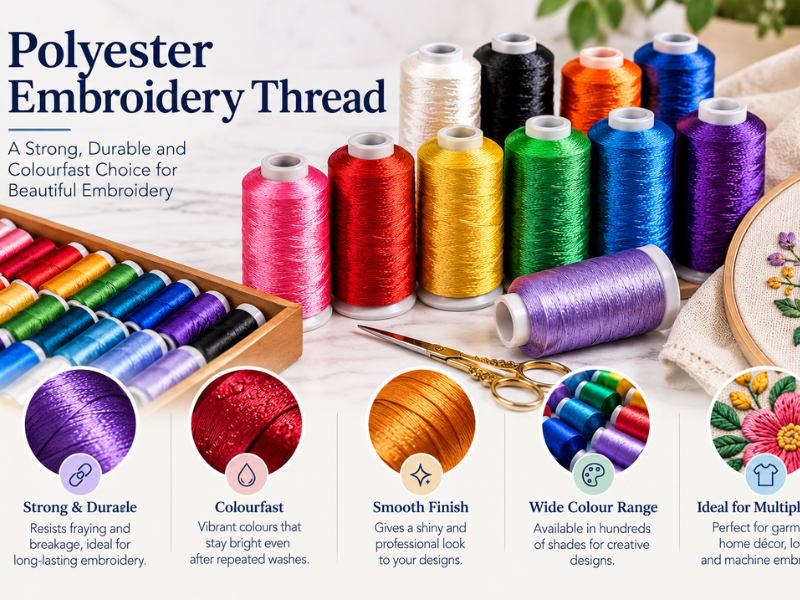
Polyester embroidery thread is widely used in machine embroidery because it offers good durability and generally performs well on garments that are washed frequently. It is made from synthetic fibres and is available in a wide range of colours and thicknesses.
This thread is commonly used to stitch company logos, uniforms, caps, sportswear, and promotional garments. Its durability makes it a practical choice for many commercial embroidery applications.
Best uses:
– Machine embroidery on garments
– Uniforms and workwear
– Logos and branding
– Frequently washed clothing
Polyester thread is often a good option when durability and colour retention matter. However, the final result also depends on the thread quality, fabric, machine settings, and washing conditions.
4. Rayon Embroidery Thread
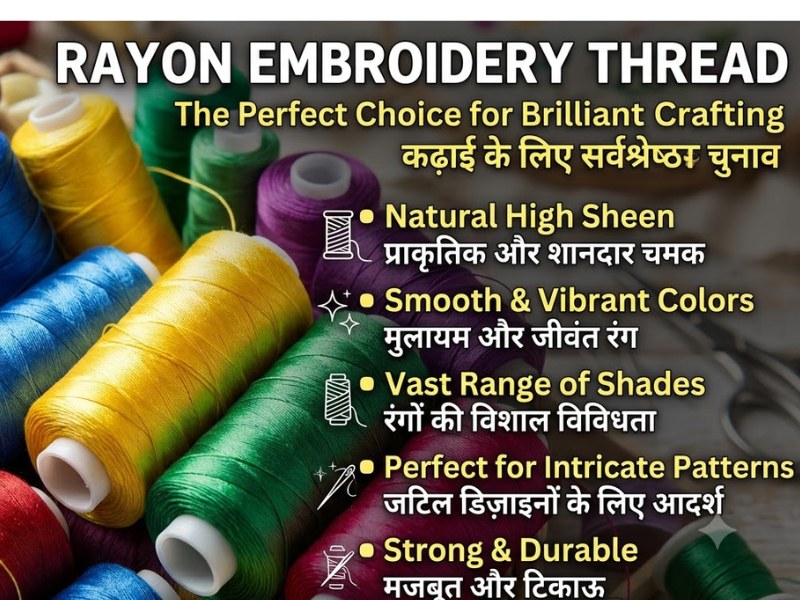
Rayon embroidery thread is known for its smooth surface and attractive shine. It is commonly used in machine embroidery when the design needs bright colours and a lustrous finish.
Rayon can create beautiful decorative patterns on shirts, dresses, accessories, and other textile products. It is especially useful for designs where appearance is a major priority.
Best uses:
– Decorative machine embroidery
– Fashion garments
– Colourful floral patterns
– Designs requiring a glossy finish
Rayon may be more sensitive to certain washing conditions than polyester, depending on the thread and dye. Check the manufacturer’s care recommendations before choosing it for frequently washed garments.
5. Silk Embroidery Thread
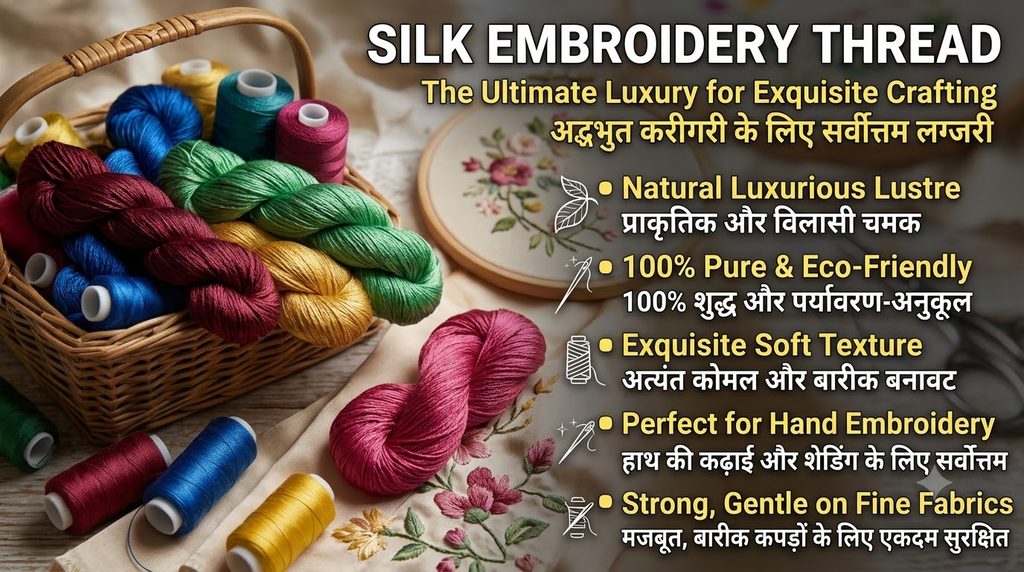
Silk embroidery thread is valued for its smooth texture, natural lustre, and elegant appearance. It is used in fine embroidery where the stitch quality and subtle finish are especially important.
Silk threads are suitable for detailed floral patterns, decorative motifs, delicate fabrics, and selected traditional embroidery techniques. They can produce smooth stitches and beautiful colour transitions when handled carefully.
Best uses:
– Fine decorative embroidery
– Detailed motifs
– Special occasion garments
– Selected traditional embroidery work
Silk thread can be more expensive and may require extra care. Before using it on delicate fabric, test the thread and needle on a small sample.
6. Metallic Embroidery Thread
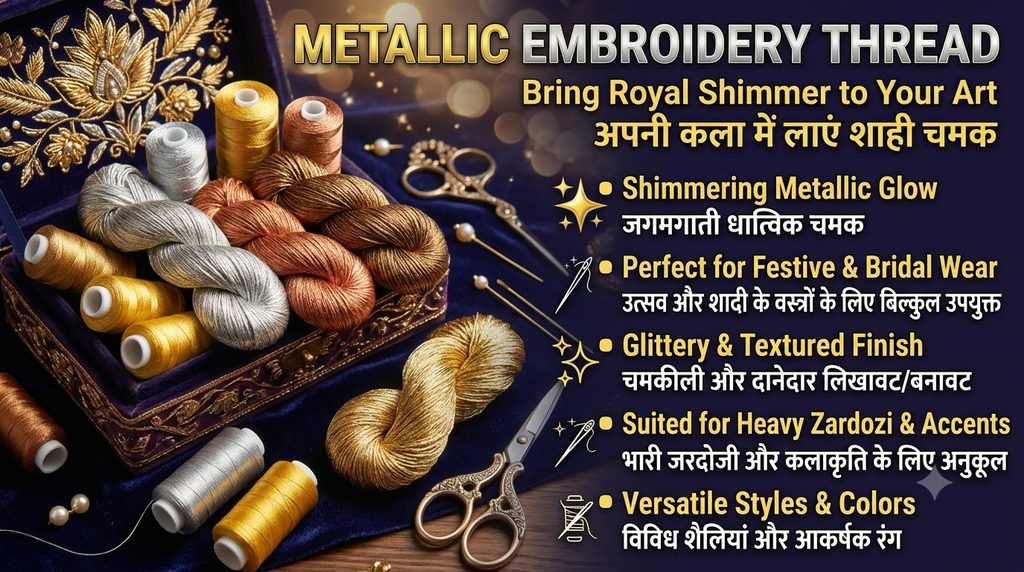
Metallic embroidery thread is designed to add a sparkling or reflective effect to embroidery. It may contain metallic-looking films or decorative fibres, depending on the product.
This thread is often used for festive clothing, decorative borders, logos, religious motifs, and special occasion designs. Gold and silver are popular shades, although metallic threads are available in other colours too.
Best uses:
– Festive and wedding garments
– Decorative accents
– Gold and silver embroidery
– Special logos and motifs
Metallic thread can be more challenging to work with because some varieties are prone to friction or tangling. Use a compatible needle and follow the manufacturer’s instructions, particularly when working with an embroidery machine.
7. Wool Embroidery Thread
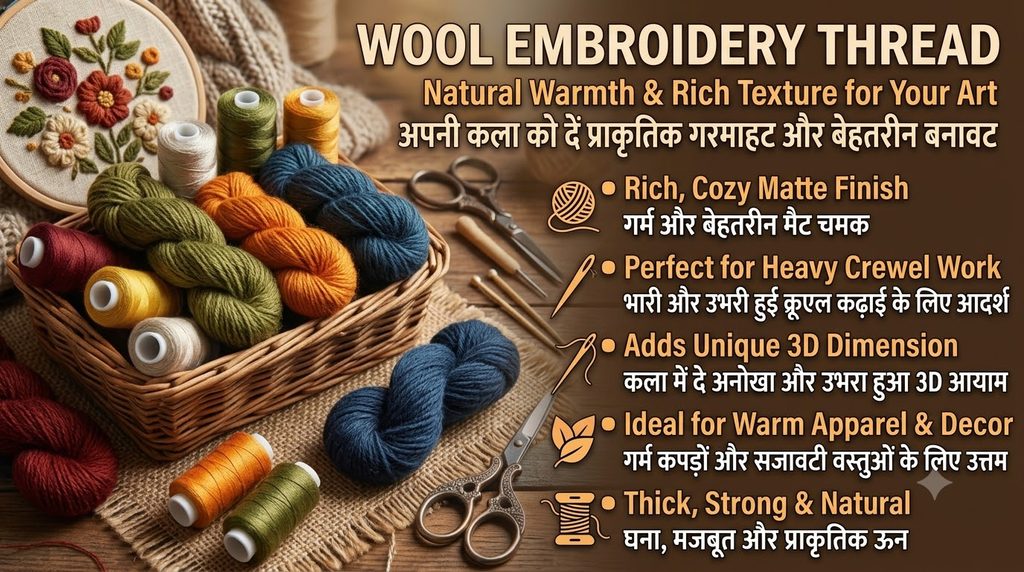
Wool embroidery thread is thicker and creates a soft, textured appearance. It is used in certain hand embroidery techniques, including crewel-style embroidery, where raised stitches and visible texture are part of the design.
Wool can be a good choice for decorative artwork, textured flowers, and designs on suitable woven fabrics. Because it is generally thicker than standard embroidery floss, it can create bold stitches that stand out.
Best uses:
– Textured hand embroidery
– Crewel-style designs
– Decorative artwork
– Selected traditional textile projects
Choose the thread thickness according to the fabric. Wool may not be suitable for very delicate materials, and some varieties require special washing and storage care.
Hand Embroidery Thread vs Machine Embroidery Thread
Hand embroidery uses a needle that is moved manually through the fabric. Cotton embroidery floss, pearl cotton, silk, and wool are common choices, depending on the technique and design.
The thread can be selected for its texture, thickness, and ease of handling. For beginners, stranded cotton floss is a practical starting point.
Machine embroidery requires thread that is compatible with the machine, needle, fabric, and stitch settings. Polyester and rayon embroidery threads are common upper-thread choices.
The bobbin usually uses a suitable bobbin thread specified by the machine or thread manufacturer. Using the wrong thread type or thickness can lead to thread breaks, uneven stitches, or poor coverage.
How to Choose the Right Embroidery Thread
1. Decide between hand and machine embroidery: Hand embroidery floss is not automatically suitable for every machine. Check thread specifications before use.
2. Consider the fabric: Lightweight fabrics usually need finer thread and careful stitching, while heavier fabrics may accommodate thicker thread.
3. Choose the desired appearance: Cotton gives a more traditional finish, rayon provides shine, and metallic thread adds sparkle.
4. Check durability and care: For uniforms or frequently washed clothing, consider a suitable colourfast polyester embroidery thread.
5. Match the needle and thread: The needle eye must accommodate the thread without excessive friction, and the needle point must suit the fabric.
6. Test before stitching: Make a small sample to check the stitch quality, colour, tension, and wash behaviour.
How Many Strands of Embroidery Thread Should You Use?
Cotton embroidery floss commonly contains six separable strands. You can use different numbers of strands to control stitch thickness and fabric coverage.
– One strand: Suitable for delicate outlines and fine details.
– Two strands: Useful for many small designs and lettering.
– Three strands: Provides more visible coverage for medium-sized designs.
– Four to six strands: Can create bold stitches and thicker coverage when the fabric and technique allow it.
These are general starting points, not strict rules. The correct number depends on your stitch, fabric weave, needle, and desired appearance. Test a small section before stitching the complete design.
Common Mistakes to Avoid When Choosing Embroidery Thread
– Choosing thread only by colour: The colour may look attractive, but the thickness or fibre may not suit the project.
– Using unsuitable thread in a machine: Hand embroidery thread may not perform correctly in every machine.
– Ignoring fabric weight: Thick thread can overwhelm delicate fabric, while fine thread may not provide enough coverage for a bold design.
– Skipping a colourfastness test: Some threads may release colour during washing.
– Using excessively long strands: Long strands of hand embroidery floss can tangle and wear during stitching.
– Ignoring care instructions: Washing and ironing requirements can differ between cotton, silk, rayon, polyester, and metallic threads.
Frequently Asked Questions (FAQs)
1. Which thread is best for beginners?
Cotton embroidery floss is a good starting point for hand embroidery because it is versatile, available in many colours, and can be separated into different strand counts.
2. Can normal sewing thread be used for embroidery?
Yes, regular sewing thread can be used for certain fine decorative stitches and techniques. However, embroidery floss or dedicated embroidery thread is often more suitable when you need specific coverage, texture, or shine.
3. Which thread is best for embroidery on clothes?
The best thread depends on the garment and embroidery method. Cotton floss is suitable for many hand-embroidered designs, while polyester embroidery thread is a common choice for machine-embroidered garments.
4. Is cotton or polyester thread better for embroidery?
Cotton is popular for traditional hand embroidery, while polyester is widely used for durable machine embroidery. Neither is universally better; the right choice depends on the design, fabric, and care requirements.
5. What thread is used for machine embroidery?
Polyester and rayon are common machine embroidery threads. The upper thread and bobbin thread must be compatible with the machine and project.
6. Which embroidery thread lasts the longest?
A good-quality, colourfast polyester embroidery thread is often a practical choice for garments that need frequent washing. Actual durability depends on thread quality, stitch construction, fabric, and care.